Woody Packard

Sketches and Notes


Spring Flight ~ 2012-04-08
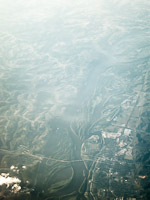
I took a very quick trip to Montana for Judy's Spring break. The second best part of the trip was the flight back, with decent window seats and passably clear skies for views of Montana, Idaho, Utah, Wyoming, Nebraska, Iowa, Wisconsin and Illinois, and Michigan. (The best part of the trip, of course, was Judy! Very close were night hiking the south lobe of Sentinel, and the Mountain Film Festival at the Wilma.)

Start to end, there is an unavoidable theme to these images, and while they are still hot-off-the-press new to me, they are very much about the process of extraction of resources from the land. Timber, minerals, crops, wind power. Hydrofracturing for natural gas, drilling for oil, scraping up salt with a bulldozer, pumping water from the ground in an effort to convince plants to grow where they would ordinarily not even consider it.

Western Autumn ~ 2011-10-25
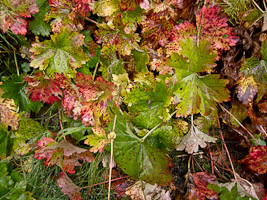
Least Weasel, Lochsa Lodge, Cutthroat. Dynamite, deadfall, dry fly. Rock Creek, Rattlesnake, rainbow. A two day fall break that fell exactly on my two days of classes left me time to spend nine days in Montana. Judy and I spent a couple of days in Idaho's Clearwater National Forest, around the Lochsa River, sightseeing, hiking, and even soaking in a hot spring along Warm Creek. Back in Missoula, I spent a few days fishing nearby Rock Creek, both at the lower section near Clark Fork and the upper, just east of Philipsburg. The weather went from rain and fog to sunshine, with cool fall temperature topping out in the 50s. It took a couple days to figure out what trout do and eat when the water gets cold, but I figured it out.

Not-So-Badlands ~ 2011-07-21
Although it was hot hot hot (as high as 106°) driving to Badlands through southern South Dakota, it was also the greenest I have ever seen it. And although there has been major flooding in the region, most of the cause of the flooding is record amounts of snow that is still melting in the mountains. The green is the result of higher than usual local rainfall, which, along with adding to the flooding in the major rivers, has caused local flooding of its own. All of this helps the imagination when traveling to the Badlands, where the results of rainfall on soil and rock are everywhere, being played out on both the large and small scale.

Just south of Badlands, the White River is high and so brownish gray from silt that is looks like it might set if it weren't moving so fast. Fields are flooded, and plants are coated with the gumbo that has just come from the hoodoos and gullies a few miles away. On the small scale, I noticed bones—probably bison—that were recently exposed from the gray pack of mud and gravel under the edge of grassland on top. (I stopped at the Visitor Center to report them on my way out, filling out the official report.) As I worked my way along the ledge hoping to find other bones, I came upon a birds nest, much more recent, that had been buried and filled with gravel, and now was in the process of being unearthed again.

Other Explanations ~ 2011-06-20
Work in progress that deals with the rightness or wrongness of displaying and interpreting visual fact. These are images from Pennsylvania, Utah, and Montana that force you to reject at least part of what looks right to understand the bigger and more complicated story of how this geology was formed, how it has come to rest in its present position. There are ways to deny this evidence, but not without committing serious leaps in logic. Several of these images are meant to be displayed in pairs.

Two of these images are hanging in a show at the Arts and Cultural Council in Rochester through September, 2011. I took it as a measure of success that when I picked up the 40" wide prints from the frame shop, the wires had been attached to the wrong sides of one of the images.

Sand, Mud, Rock, Water ~ 2011-06-19
Unavoidably, this is what you end up looking at when you hike in Utah—rock and the ingredients of its formation and erosion. Here drought limits vegetation, wind scours, water shapes, and time exposed to the elements colors exposed rock that, more than in friendlier climates, lays naked for you to explore. The causes of some of these formations are easy to imagine, but with others it requires more of a stretch. Water-formed sedimentary layers are up-ended, seemingly solid walls split with sculptural smoothness and precision, parallel eroded cracks end abruptly when they run into other parallel cracks running in a different direction. Around each bend is another test for your imagination.

Landscape, Mostly Utah ~ 2011-06-07
Here are some samples of the kind of land we saw while hiking and driving. (I am saving the geological details for another entry.) Although weather limited what we were able to see, as always, it makes things interesting. Here in the southwest, it is the carving force, the means for removing huge quantities of sand and rock. For the first part of our trip that fact was hard to appreciate, for although we had rain, snow, and hail, we saw little to feed our imagination for the process of erosion. That changed when we returned to Montana. In Missoula, the Clark Fork was rising past flood stage, and the Bitterroot was very high and fast. Both were brown with mud. Higher up, even small streams were overflowing their banks from record amounts of snow melt.

Travel In Utah ~ 2011-05-31
Once classes were done in May, I flew to Missoula and Judy and I headed for southern Utah to do some hiking. By way of Bryce Canyon NP, we headed to the Grand Staircase Escalante National Monument, and started with a few days in Harris Wash, an easy way to, quite literally, get your feet wet in this terrain. It is a canyon bottom hike with plenty of water, lots of willows, and is the classic descent from rounded dunes at the start to towering walls of rock at the bottom. Then on to Capitol Reef, through the San Rafael swell, then the scenic route back to Montana.

A Week In April ~ 2011-04-13
This is not really the month that starts like a lion and goes out like a lamb, but this past week has had those extremes. For two days last week it snowed in Alfred, and although it did not stick in town, it certainly did on top of the surrounding hills. By Friday afternoon, it was gone. By Sunday it hit 70° in Rochester. And by Wednesday it was raining, foggy, and back down in the 40s. But between Saturday and Tuesday I got spinach seeds in the ground, raked out some more beds, and harvested the end of last year's leeks.

Commerce Building, Rochester, NY ~ 2011-03-22
I have been digging back into my film archive today, looking for images that I made when I first moved to Rochester for a project possibility that involves the dynamics of downtown Rochester, NY. Here is a sad series of images taken one rainy Saturday morning in the Spring of 1980. The Commerce Building was coming down.

I had moved to Rochester to go to school at RIT, had blown through the wealth I thought I had accumulated to do so, and was working as an assistant to an up-and-coming commercial photographer during my very long days. On weekends I was concerned with the fate of Rochester's architectural heritage, which was being bulldozed for a long list of reasons. At the time I was trying to stay one step ahead of the wrecking ball, documenting some small set of buildings before their demise.

This series was shot with my father's 4x5 Speed Graphic, a camera perfectly unsuited for the task. It requires sheet film, loaded in the dark, and protected for most of the morning in a waterproof ammo box. Alas, it had to come out of the box to use it, and got wet in the rain. When I went to unload the film I discovered that water seeping into the holder had stuck the film to the inside of the film holders. To get the film out, I had to soak the holders in water to loosen the sheets of film.

Foundations, Time ~ 2011-03-06
I am not getting rich as a teacher, but every now and then there are rewards. Here is one of them.

Raw Goods ~ 2011-03-02
I'm working on a catalog for a show called Raw Goods that was put together by Ezra Shales and Anne Currier and was on display though late February 2011 in the Fosdick-Nelson Gallery at Alfred. It contains manufactured artifacts produced in the Upstate/Southern Tier region of New York, and contains items of both extreme utility (Victor Insulator) and decoration (Boston Valley Terra Cotta.) Form, with function laid bare. A few samples...

Lake Arctario ~ 2011-01-31
The past couple of days I have been admiring the ice build-up on Lake Ontario, picking my way out to the edge where the waves build round balls of ice and sand by the thousand. Thin ice gets pushed ashore and lumps together with other ice and snow, and that in turn gets heaved on top of other ice. Yesterday the ice ended abruptly, meeting breaking waves. After the temperature dropped to 5°F last night, there is no water to be seen today from the same spot, as a new batch of ice has built up, extending as far as you can see when standing just a few feet above the surface of the ice.

January Intersections ~ 2011-01-15
In addition to the time spent in the air, I have been spending a lot of time in the car the past couple of months, in Montana, then Idaho and Washington, and this week back in New York and Pennsylvania. After seeing how stark the snow made the aerial images on the flight home I am inspired to work on some overpasses that take advantage of the snow, whether pristine or well-worn. My sister Jan was driver for the Pittsburgh images, fending off two security cars that showed up as I worked under the Fort Pitt Bridge just under the tunnel. This was not homeland security--it was the day of a Steeler's game. Some earlier pieces of this project are here.

MSO > SLC ~ 2011-01-05
Although it doesn't always work out this well, this is why I always ask for a window seat. I left Missoula at 8:45 as it was just getting light, two weeks after the solstice at the very western edge of mountain time. The window was not particularly clean, and less so after the de-icing process. But once in the air, the solvent sloughed away, the sun came up, and we traveled above the clouds until they opened up over northern Utah. Our approach to Salt Lake City dropped through the clouds again, and into the heavily settled valley that was covered with snow except for roads, parking lots, and clumps of trees and very steep rock. These were shot with my newest favorite camera, a Canon S95 that provides elegant manual control over all three basic functions—aperture, shutter speed, and focus.

Using the file date and time (to the second) I was able to map these back to their locations on Google Earth.

Snowbound ~ 2010-12-29
We woke up to wind and snow this morning and were planning on heading to Blacktail for a skiing expedition, but it has been snowing all morning—enough that it is unlikely we'll get past the driveway. It is still windy and snow on the county road is drifted into hills that would be tough plowing with a Civic. Wish we had, say, a 4wd pickup.

Good Ski, Bad Drive ~ 2010-12-20
While Jamie visited friends in Libby, Judy, Roy and I went for a ski in the Flower Creek cross-country ski area. We skied with one of the caretakers of the ski area and an old acquaintance of Roy's from when he and Jamie lived in Libby. The skiing was great, but the drive home put a bad wrinkle on the day.

Sorry John, but I'm glad it wasn't my car. All five of us walked away safely.

Montana Winter ~ 2010-12-18
I am in Montana this holiday season, with Judy and her parents on their small cherry orchard at the edge of Flathead Lake. The days are short and the weather has been mild, with just a light covering of snow. Although I brought cross country skis, I have been doing more running than skiing, and because of how much there is to pack into a day, many of these are images were caught at dusk or later.

Pet Cemetery ~ 2010-11-12
Today I had the good fortune to be guided to the second oldest pet cemetery in the country. I was visiting the Humane Society in Hornell, NY, when Mark Mahoney, executive director, told me about a project he was working on to connect the records of hundreds of long dead pets to their physical plot of ground.

Late Garden ~ 2010-11-12
Here is some salad that was picked from my garden today in mid November in Rochester, NY. We have had several hard frosts so most of the fragile plants are long-gone. I still have a few green zebra tomatoes, but the Romas have turned to mush. Same with peppers except for those that have partially dried on the plant—or is it that they are too hot to succumb to the cold. These are greens that can take a little frost—escarole, mustard, mizuna, agugula, and some chard. Right on top is some dill, second or third generation freelance, that is still trying another chance to seed.

Butte ~ 2010-10-15
I visited Judy in Butte, my first time there. I have driven past it on I-90 a dozen times and had not thought much (good) of it, seeing only the big pit from the road. Since then I have read Ivan Doig's Work Song and spent almost a week traveling by foot there. As with many places, it is more than it seems when driving by at the legal speed limit of 75 mph. Along with much hard labor and great risk, there has been no short supply of money and ambition to shape the hillside—both above and below the ground.